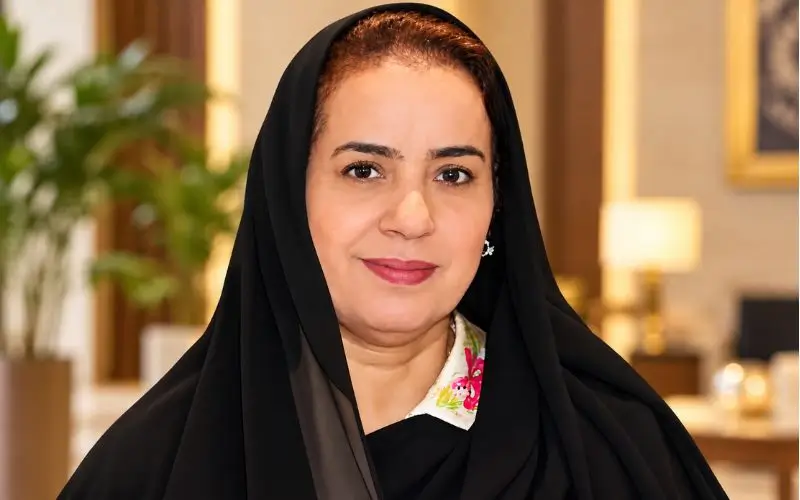
Ousha Al Suwaidi was one of the most important Emirati poets of the 20th century and was a leading figure in the art of Nabati poetry. She was born in Al Ain in 1920 and began to sing her poetry in the literary context and became known at a young age. Later, her work was closely connected with Emirati identity, memory, culture, and experience of life in the Arabian Gulf.
She was known as “Fatat Al Arab” or “Girl of the Arabs” and became significant as she broke into a literary tradition that was predominantly male. Her poems were about love, wisdom, nostalgia, praise, and patriotic sentiment and were deeply influenced by the scenery, the language, and the social setting in which she lived.
Who Was Ousha Al Suwaidi?
Ousha bint Khalifa Al Suwaidi was an Emirati poet who contributed to the current image of the Nabati poetry in the UAE. According to official cultural sources, she is one of the great poets of the 20th century in the Nabati style and contributed to the involvement of women in Emirati poetry.
Born in Al Ain in 1920 in a family that had a deep appreciation for literature and poetry. As a child, she was introduced to poets and poetic meetings, thus gaining an early familiarity with a tradition that would become a hallmark of her career.
Her talent was evident early in her life. At the age of 15 she was already well-known for her recitations of her own poetry, a feat that was especially notable given the strong connotation of poetry recitations at the time being a feminine endeavor by men.
She was inspired by classical Arabic poets, including Al-Mutanabbi, Abu Tammam, and Al-Ma’arri, as well as well-known poets from the Arabian Peninsula known as Nabati poets. The synergy of these factors served to create an interconnected mode of poetry that united traditional Arabic sensitivity with the vernacular poetic culture of the Gulf region.
Early Life and Literary Formation
Her childhood was important to her. Her family loved poetry, and the broader cultural environment introduced her to poets and the significance of poetry as an audible form of expression and as a way of doing social justice.
According to her biography, she lived in Al Ain for many years before spending some 15 years in Qatar and finally moving to Dubai in the late 1980s. In these various locations, she gained an expanded Gulf-wide perspective for her poetry, rather than that of a single locality.
From a young girl reciting poetry to a literary figure, it didn’t happen overnight, but it was a remarkable journey. Her precocious success showed that women could assert themselves in a poetic culture that was largely male-dominated in this area.
She was originally called Fatat Al Khaleej, which means “Girl of the Gulf”. She went on to be nicknamed “Fatat Al Arab,” which is associated with the name of Sheikh Mohammed bin Rashid Al Maktoum.
Sheikh Mohammed bin Rashid, in 1989, sent her a poetry book that included verses referring to her as “Fatat Al Arab” (the young woman from the Arab world) in the UAE Department of Culture and Tourism’s Poetry Encyclopedia. From then on, the name was forever connected to her literary reputation.
Why She Became Known as Fatat Al Arab
The nickname “Fatat Al Arab” was no mere coincidence. It marked her height in Arabic poetry and the appreciation she had garnered from the UAE’s cultural luminaries.
The UAE Poetry Encyclopedia states that she was previously presenting her poems under the name ‘Fatat Al Khaleej’. The 1989 exchange with Sheikh Mohammed bin Rashid resulted in the more popular title “Fatat Al Arab.”
The title was also an integral part of the way later generations encountered her work. It has continued to be used in various contexts in cultural institutions, biographies, and awards when talking about her contribution to Emirati literature.
Her reputation was not as much for official recognition as it was for her popularity. She built up a massive oeuvre of poetry that was disseminated in books, newspapers, records, cultural events, and musical settings. Her speeches and messages were heard not only by the literary community, but also by the general public, as several of her poems were set to music and performed by Emirati and Arab artists.
Ousha Al Suwaidi and Nabati Poetry
Nabati poetry is a classical poetry of the Arabic language, traditionally linked to the Arabian Peninsula. It has served as a significant means of recording stories, values, emotions, social observations, and memories in a language that could be understood and recited within the context of everyday communities.
In the UAE, she became very much associated with this tradition. The Torath cultural platform recognizes her as a significant poet of the 20th century in the Nabati tradition and highlights her significance in the tradition, as accounts of Emirati poetry may not account for women.
Her poetry was not subject-bound. Along with wisdom, patriotism, praise, nostalgia, and reflections on life, love, and emotion were featured. Imagery from the natural environment also continued to be a source for the Gulf.
Poems celebrating the land and the sea of the country, its past and present, are described in the official biography. This poetic relation to place has been important to the value of her poetry as not only literature, but also as a document of cultural memory.
Another good guide to the scope of her work remains in the form of the Department of Culture and Tourism’s Poetry Encyclopedia. In its archive it contains an archive of 29 poems entitled “Qaid Al Jam” including poems written in Al-Mas’houb poetic meter.
That archive is so valuable because it takes the discussion beyond a general description of her legacy. Users can access actual poems, their structures and context via an official UAE cultural database, with the poems attributed to the author.
Themes in Her Poetry
The range of her poems was one of their hallmarks. She did not devote herself solely to the literary aspects of her work but switched from a focus on personal emotions to social commentary, from adoration to identity.
Love and Emotion
Her poetry often included a theme of love. The UAE Poetry Encyclopedia has preserved some poems that employ emotional imagery, with a sense of longing and personal attachment as the main theme. In this aspect, she has shown how the experiences of the very personal can be passed through traditional forms of poetry by an author of the poetry of the Nabat tribe.
Wisdom and Life Experience
Another one of the important elements was wisdom. Often, her verses addressed transformation of things, patience, relationships, and the passage of time. These themes aided her in maintaining access to her work beyond the period of history in which it was written.
Patriotism and Cultural Identity
Her poems also conveyed love for home and family. This link between her word repertoire and the local environment is highlighted repeatedly in the official cultural sources, such as the UAE’s landscape, heritage, and social memory.
Religious Praise
Later, religious poetry was another important component of her writing. The importance is mentioned in her official biography, where she notes that one of her major poems is a praise of the Prophet Muhammad. Sources also indicate that she retired from general poetry in the late 1990s but continued to write poetry praising the Prophet herself.
Published Works and Poetry Archive
Her poetry has been saved in several ways. Throughout the years, her poems were published in newspapers, magazines, audio recordings, and poetry books.
According to her official biography, her first book of poetry was published in 1990 by poet Hamad Bin Khalifa Bou Shehab, and her second book in 2000. The poet’s official biography was later published by Dr Rafia Ghubash in 2011.
The UAE Department of Culture and Tourism keeps an online archive of attributed poetry today. The database is one of the most useful primary cultural resources for readers of her literature and presents individual poems with their titles, poetic metres, and verses.
The value of this digital preservation is that it is relevant to the preservation of poetry that, traditionally, has relied heavily on oral transmission. An institutional archive provides a means for the researcher and reader to view individual works, as well as to examine them as part of a secondary description.
Major Recognition and Awards
Her literary work was formally acknowledged both while she was alive and posthumously.
She was awarded at the 11th Sharjah Festival of Classic Poetry in 2010. Her contributions to other aspects of the culture were also recognized, as she received the Al Owais Award in that regard, and her official biography reads that she was recognized as a cultural personality.
Her legacy continued to be institutionalized following her death. She is one of the 2019 awardees of the Abu Dhabi Festival Award, which was launched in 2012 for distinguished lifetime achievement in arts and culture.
The recognition at the 2019 Abu Dhabi Festival is more meaningful, as it put her literary legacy into the wider awarding program of the regional and international cultural scene. The official record of the festival in Abu Dhabi confirms her being awarded that year.
Her name was also mentioned in poetry campaigns to promote new young female poets from the UAE. The Ousha bint Khalifa Al Suwaidi Award for Nabati Poetry was launched by the UAE Ministry of Culture and Knowledge Development in recognition of her literary legacy and role in the stature of Emirati women in cultural life.
Influence on Women Poets in the UAE
Her significance goes beyond her poems. Her career proved that an Emirati woman has strong potential to establish authority within a field of literature that had long been dominated by men.
The Emirates Writers Union called her an inspiration to the women’s poetry movement and noted that she “was a significant force in the overall culture of the Emirates.
The influence also spread to the institutional level. In 2011, an annual female Emirati poets award was established in her name, and a section of Dubai’s Women’s Museum was dedicated to her work and life.
Her legacy is mentioned not just as that of a single poet, but as a contribution to the history of women’s poetry in the United Arab Emirates, owing to her prolific amount of output as well as her influence in the culture.
Her Connection With Dubai
While Al Ain played a crucial role in her childhood, Dubai also played a significant role in her life. According to her biography, she came to Dubai as part of her life in the late 1980s, having spent most of her life in Al Ain, apart from her time in Qatar.
Later, Dubai played a significant role in her remembrances. Her life and possessions are on display in the Women’s Museum, Deira. The National’s report in September 2026 said the bottom level of the museum was devoted to the poet and contained displays of her personal items with Arabic calligraphy around them.
This provides some tangible connection with a poet who is known mainly from written and recorded poems.
Google Doodle Recognition
On November 28, 2022, Google honored her with a special Doodle that reached people all over the world.
The recognition highlighted her contribution to Arabic vernacular poetry and brought her life to the international spotlight. The Doodle was illustrated by Emirati artist Reem Al Mazrouei based in the UAE’s capital, Abu Dhabi.
This was also a significant moment. The 2022 Doodle marked an 11-year milestone since the 2011 recognition in honour of the annual award for female Emirati poets created in her memory.
With the Doodle, she brought her story to people who might not have known the world of literature in the UAE or Nabati poetry. It also strengthened Arab identity through her poetry and heritage and cultural identity of the Arabian Gulf.
Death and Continuing Legacy
She died in 2018 at the age of 98. The Emirates Writers Union openly expressed their sorrow for her passing, and the role that she played in the development of Nabati poetry was recognised, as was her impact on women’s poetry and the UAE’s cultural landscape.
Her death did not put an end to the growth of her literary legacy. Rather, her work was being published, archived, and interpreted by cultural institutions.
She is honored by The Abu Dhabi Awards for being a significant poet who brought local words and identity to the fore. Many of her poems were also turned into song lyrics sung by Emirati and Arab artists, as mentioned in the award’s profile.
Her legacy is thus spread across a number of related fields: Emirati literature, Nabati poetry, cultural history of women, music, heritage protection and public cultural institutions.
Why Her Poetry Still Matters
An ongoing fascination with her work has been its personal and cultural-historical approach. Her poems are not only literary texts; there are elements of the landscape, relationships, values,s and social environment of the Gulf.
Her role in the history of literature is especially significant in the field of women’s literature. It is noteworthy that her name was heard during a time in which poetry was largely male-dominated, and that she evolved into a model for subsequent poetry by women in the UAE.
The UAE Department of Culture and Tourism has also preserved her poems, which can be studied directly. Readers are not left to the work of biographies or contemporary summaries, but have an institutional record of individual poems and poetic forms.
Her impact extends beyond the realm of literature as well. Her work has been introduced to different audiences through poems being set to music, being exhibited in museums, being awarded for cultural purposes, and being honoured in the Google Doodle of 2022.
It is her breadth that makes her legacy unique. She was not only a renowned poet of her time, but also a part of the UAE’s cultural history.
Conclusion
Ousha Al Suwaidi’s story is inextricably linked to the evolution of the modern literary identity of the Emirati. Her poetry combined personal feeling with traditional Nabati forms and perceptions of the Gulf environment—the career itself a challenge to the notion that great poetry had to be authored by a man. Her recognition by UAE cultural institutions, preservation of her poems in the national poetry archive, awards named after her, and dedicated museum displays prove that her contribution lives on after her death. Her work continues to be a valuable introduction to Nabati poetry, Emirati heritage, and the history of women’s literary expression in the Gulf and remains accessible to new generations.
Frequently Asked Questions
Who was Ousha Al Suwaidi?
She was a great poetess, an Emirati poet and a prominent figure in Nabati poetry.
What was her famous title?
She was known as “Fatat Al Arab, which means “Girl of the Arabs”.
What type of poetry did she write?
She composed mainly Nabati love, wisdom, patriotism, and heritage poems.
When did she die?
She died in 2018 at the age of 98.
Why is she important?
She was instrumental in the development of Emirati poetry among women and was an inspiration for future generations.
Where was she born?
She was born in Al Ain in 1920 and later became one of the UAE’s most prominent Nabati poets.
When did she become known as a poet?
Her poetry was well known in Emirati literary circles since her youth.
